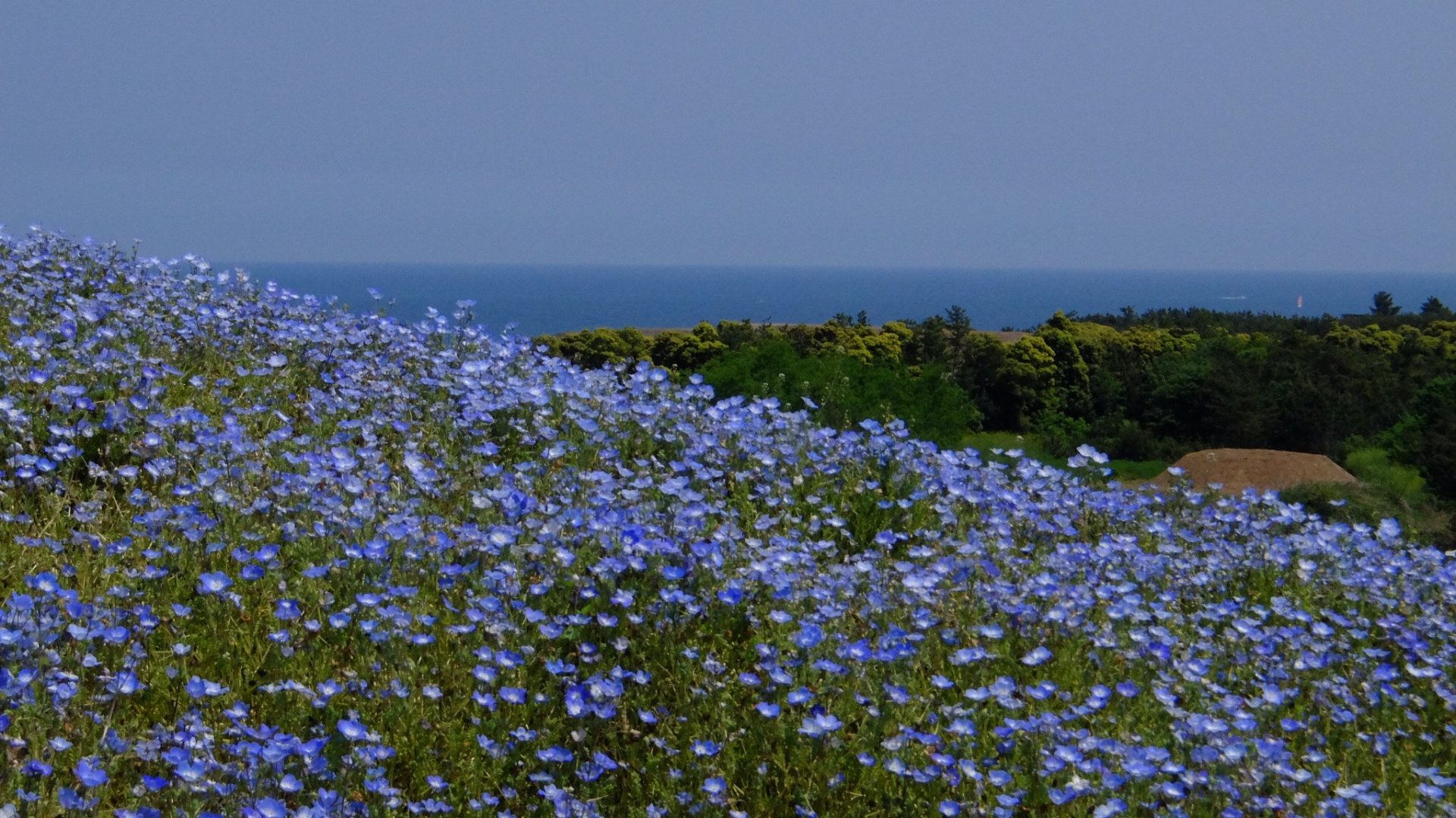
He once wanted to live in a cottage by the sea. I no longer know if this is still true. I lost sight of what he wanted. What his dreams have evolved into. He retreated from me as if he disdains me.
From our balcony in Anilao, Mabini, Batangas. Photo by callmecreation.com
Anyway, I still hold that dream of living small by the sea. I’ve always wanted to live by the sea or by the mountains (I grew up by the foot of Mt. Makiling so it makes sense). Since I was a child, we always went to the beach at least once a year. My love for the sea is coupled with my interest in snorkeling and now freediving.
I never wanted to live in a big house. I’m a simple provinciana girl who just wants to manage a small but comfortable household; a small homestead growing our own food and keeping a few animals. I want to live sustainably. A cottage by the sea is perfect. I never tire of sunsets by the sea; it’s one of the most beautiful things to witness in life. Staring at the horizon, wondering what’s beyond it. Hearing the splash of water against the shore is calming at night, rocking me to sleep.
Ever since highschool, I’ve been fascinated with small interior design. Until now I watch Youtube videos of small homes. Like I’m preparing myself for a future in a small cottage by the sea. Simple life in the province. A condo in the city for business.
Bridge going to Pili Drive, UP Los Baños. Photo by callmercreation.com
Where I am headed? I don’t know. It doesn’t matter.
I’m a goal-oriented person, that’s why I am where I am today. However, life fucks up, right? So I’ve learned in the past 20 years that it’s nice to have goals but it’s not the end all and be all of life. The goals set you on a course and help you weed out what works and what doesn’t. It lets you have boundaries. Like I only took jobs that would lead me to a journalism career. After journalism, who knows? It’s ok not to know. But at least now I know I may not go into investment banking (I was invited once or twice) because seeking mandates is tough. Chasing mandates is not as enjoyable as chasing stories. The money sucks in journalism but so far it is allowing me to support five people (my two nannies, me, and my girls). Let’s see how I would be able to increase income without having to jump into investment banking. I may go into business, but I don’t know if I still have the energy to run a business like we did before. Consultancy probably is the way to go…damn it. I don’t have a PhD. And I certainly will not pursue a PhD at this stage because scholarships abroad have an age limit of 36 or 37 years old. But I have earned my stripes and may need to earn more before or during a consultancy gig. Not really sure how this will work out but that’s the beauty of it. It may just fall on my lap one of these days and it will sort itself out.
That journey may not necessarily mean it’s only here in the Philippines. My girls and I may end up somewhere else. Who knows? But that’s the beauty of it. It’s the openness to possibilities that makes life beautiful.
It’s ok not to know what’s at the end of the bridge. For me it’s the journey over the bridge that’s most important. Make every little thing count. Enjoy the beauty in the simplest things: Preparing meals for my family. Watching sunsets. Watching the sunlight being filtered by my bedroom curtain while I am tucked between the sheets. Hearing my children’s squeals of laughter. Being by the sea and under the sea. Going up hills and mountains. Walking among flowers in Hitachi. Going to onsens. Taking hours-long train rides to somewhere. Discovering the best teppanyaki in the middle of nowhere in rural Japan. Walking around UP Diliman campus. Petting my cats. Sipping coffee in a coffee shop while I write or watch people. Writing.
Is it the pursuit of happiness? Umm, probably not. Happiness may be incidental, something that happens. You cannot be constantly happy because life fucks up. And chasing happiness is…fucked up as well. Maybe the best thing I can think of right now is the pursuit of contentment. Being content is not equal to being mediocre. Contentment may be reaching a high bar that you have set for yourself. But never being content may be equal to unhappiness and may launch you into this endless pursuit of nothingness.
So where do I go from here? I don’t know. And it’s ok.
My piano in my mother’s house. Well, I consider it mine sinceno one else plays it. Photo by callmecreation.com
What is home? Home is the place where you feel most safe and comfortable. It welcomes you when the world has defeated you. Whatever happens, it opens its arms and wraps you with it until you fall asleep. Home is like a lullaby. Home is where your heart is.
I am in my childhood home now for Christmas. But somehow it’s no longer my home. It no longer comforts me. It’s a bit stifling now, to be honest. It’s nice to go back to it but I feel boxed in. Like it doesn’t allow me to grow up.
I just realized that the home I have now, that small old apartment, is home. With all the quirks that come with an old building, the happy and sad memories, the cats, my soft bed…it sings me to sleep. It welcomes my tired heart. It envelopes me. It is mine.
Marikina Riverside Park. Photo by callmecreation.com
A special person in my life told me that he feels like he is a burden to me that’s why he has pushed me back. To ease the burden. I told him that life is a series of choices and it was my choice to be with him. A burden is an unwelcome load. He was not a load. Nor unwelcome at that.
Anyway, upon stepping back and analyzing things, the truth of the matter is it wasn’t really his feeling of him being a burden that is the main problem.
It is me who is a burden.
My co-dependency is a big weight to carry around. Co-dependency = my happiness depends on the happiness of that person. And if that person is not happy, then the co-dependent feels like she is a failure then she would do more; in the process she will lose herself in the situation/relationship. All the more the other party (if the other party is does not have narcissistic personality disorder) would feel overwhelmed. The other party would feel he is not doing enough to feel equal. Then there will be a feeling of not deserving the love the co-dependent is offering.
And when the other party is overwhelmed, things can get disorienting. The parties lose proper perspective. Then comes the crumbling of something that was supposed to be wonderful. It has become a prison.
So co-dependency is a symptom of something that has to be cured. What disease is this, it is still unknown. It can be insecurity. I really don’t know. What I know is I am a co-dependent that’s why I got involved with a narcissist. My shrink diagnosed that my distant ex has narcissistic personality disorder (NPD). Narcs always gravitate towards co-dependents. We’re easy to manipulate.
My shrink is smart, my cousin said. Right off the bat my shrink said, “your dad is an alcoholic.” Ummm yeah, I said. “Your mom is a co-dependent who could not leave your dad.” Spot on.
“You inherited your co-dependency from your mother. That’s what you learned while growing up.”
And she said I was thought-blocking whenever I tried to talk about that relationship with this narc. I still had barriers that I had put up in trying to protect the narc. I was filtering information even with my shrink. “Because you do not speak ill of your partner to other people,” that’s what my mother taught me. Hence, the though-blocking.
So now with this recent ex, my co-dependency has been overwhelming to the point that it may have destroyed his confidence on a lot of things. Knowing that I am co-dependent and yet I jumped into this new situation is not healthy. It will not cure me of this symptom.
I have to zero in on the disease to cure me of the symptom. I need to figure out whether this is because of this inferiority complex I had while growing up. I suffered from very low self-esteem ever since I was a child. Every relationship I had was a failure since I used those relationships to cure me of my insecurities. To validate myself.
My father also had NPD. All my life it was always a battle to win his love. I didn’t realize that it was a losing battle because narcs cannot love other people above themselves. Yes, he loved his children and my mom but it’s always himself first, everyone else comes after.
So maybe that’s where the insecurity comes from. As a little girl I always thought myself as unloveable. I had that implanted in my brain that no one would love me. So people keep scratching their heads why I keep having relationships with ugly men (literally and figuratively). Maybe because I felt they were the only ones who would love me. That’s why it took years before I was able to leave the narc. Unfortunately, it was already too late. I already had trauma.
But the last one was different. We’re both mature individuals albeit with issues. But we have mutual respect for each other so that also made a difference. However, his need for affirmation and fear of rejection is feeding my co-dependency. It was a perfect combination for an unhealthy relationship.
So here we are in this state of flux. Well, it’s no longer a flux since it’s over. It’s a painful but beautiful lesson learned.
This article from Psychology Today helped me recognize that stepping back is necessary. That letting go is a path to curing myself of co-dependency. Until I resolved my insecurities, cured me of my need to be loved to have self-worth, I will not have healthy relationships.
I’m 41 years old. I still have a lot of growing up to do.
The PHP 129 I spend every month for Spotify is well worth it compared to the subscription I pay for iFlix (the person who used to watch it is gone) and Viu (haven’t had time) since I use Spotify everyday. Every single day.
Especially now.
It gives me the ability to create a playlist instead of burning cd compilations of all the heartbreak songs I can get my hands on. Or mixed tapes, to be really so ’90s about it.
Here’s the playlist I am creating for this extraordinary time. A mix of really old school songs with new ones.
A photo to go with the songs in my Spotify playlist. Eastridge, Binangonan, Rizal. Photo by callmecreation.com
Then a friend sent me this podcast of an advice column published by the The Boston Globe, which I had been listening to the entire night. Really educational and healing as well.
Here’s a show for you… S1E1: Getting Under to Get Over episode of Love Letters https://open.spotify.com/episode/0ho8z2KnlCjS3nbvpcLQIk?si=e2BQyQzFTOKsJnul2eA4lA